CLASSES
AAA, AA and A
These classes cover both abrasion and impact. AAA and AA must have elbow, shoulder, knee and hip protectors; in class A the hip protectors are optional.
Decode a class techweargear
WHAT THE STANDARD SAYS
Motorcycle kit is more than weatherproofing.
Decode a class
AAA TO Con the label inside
Protective jackets, trousers and suits sold as rider clothing are tested to a European standard and given a class from AAA to C. The letters tell you how much abrasion and impact protection a garment was tested for.
Updated
THE SHORT ANSWER
One standard, five classes.
More A's means more tested protection.
CLASSES
These classes cover both abrasion and impact. AAA and AA must have elbow, shoulder, knee and hip protectors; in class A the hip protectors are optional.
Decode a classTHE TEST
Material is spun onto a real concrete surface to mimic a rider sliding to a stop. It fails if a hole of 5 mm or more opens in the layer nearest the body.
How it is testedTHE LAW
The Highway Code says riders MUST wear a helmet. Strong boots, gloves and suitable clothing are advised because they may help protect you in a collision.
See the numbersDECODE A CLASS
Pick the class printed on a garment's label to see what EN 17092 asks of it. The bar shows how much tested protection the class requires.
Based on SATRA's summaries of EN 17092:2020, the European standard for motorcycle protective clothing. This is general information, not safety or legal advice.
TWO NUMBERS WORTH KNOWING
One figure on the risk on UK roads,
one on what a protective jacket did in crashes.
21%
Share of road deaths who were motorcyclists
In 2024, 21% of people killed on Britain's roads were motorcyclists. The Department for Transport says motorcyclists had the highest casualty rates per billion miles travelled.
GREAT BRITAIN · DfT 2024
26% vs 57%
Riders with upper-body open wounds
In a 12-month crash study in the Australian Capital Territory, 26% of riders wearing a motorcycle jacket had cuts or abrasions to the upper body, against 57% of those without one.
CRASH STUDY · RAC FOUNDATION
The RAC Foundation report also notes that substantial proportions of protective clothing failed under crash conditions, which led Australia and New Zealand to set up the MotoCAP star rating scheme.
FOUR CHECKS TO MAKE
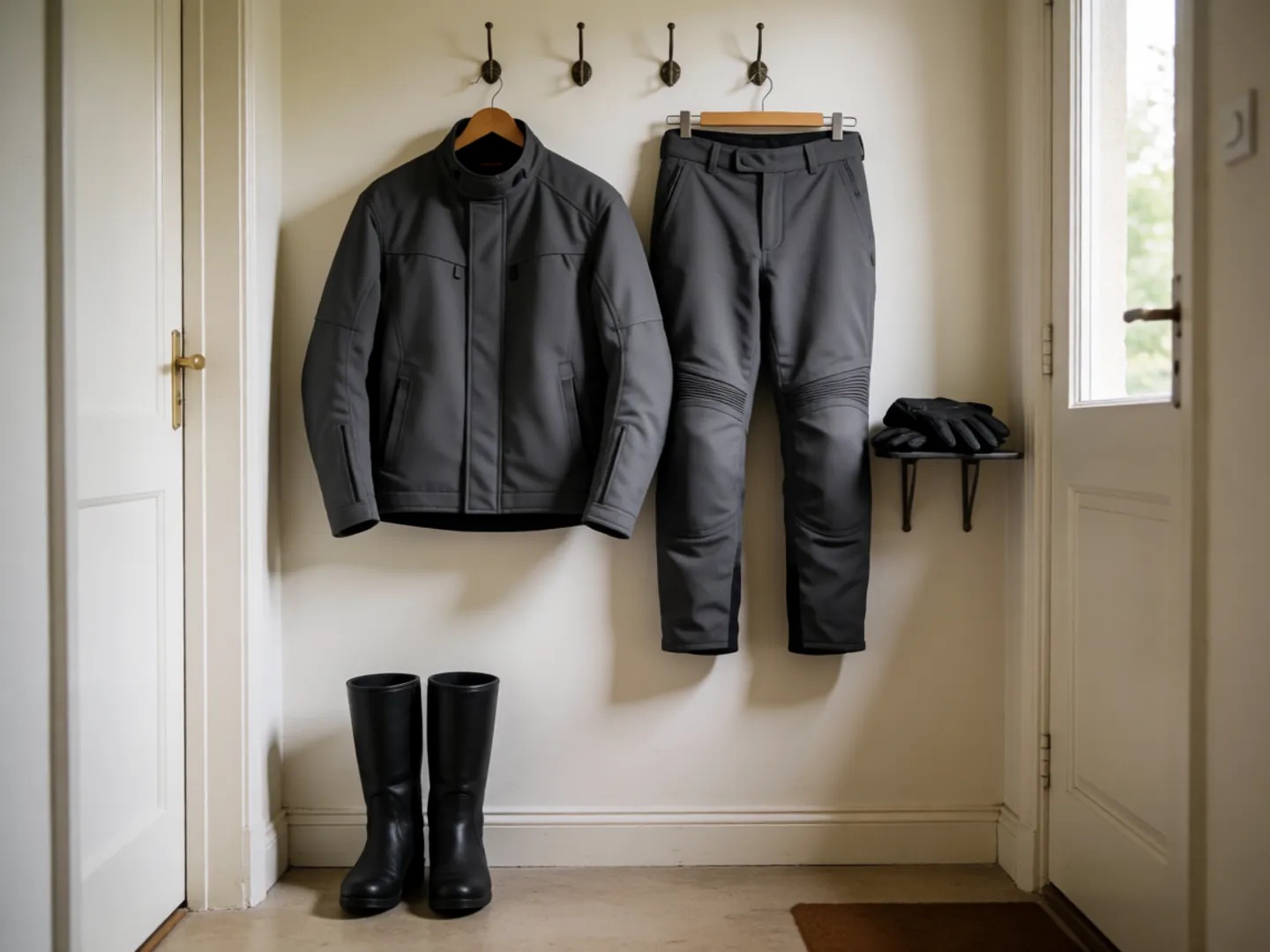
A few simple checks show whether a jacket or pair of trousers was tested as protective clothing at all.
Look for EN 17092 and a class from AAA to C on the label inside the garment.
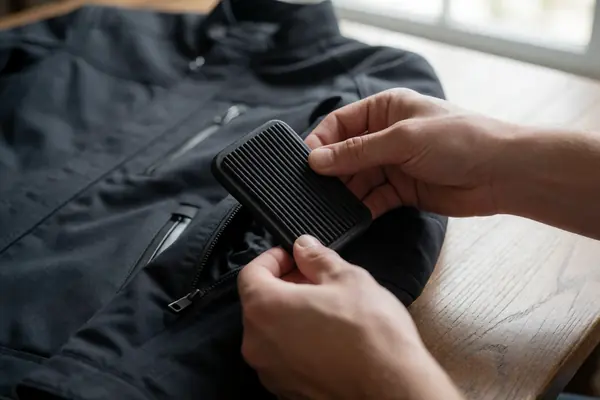
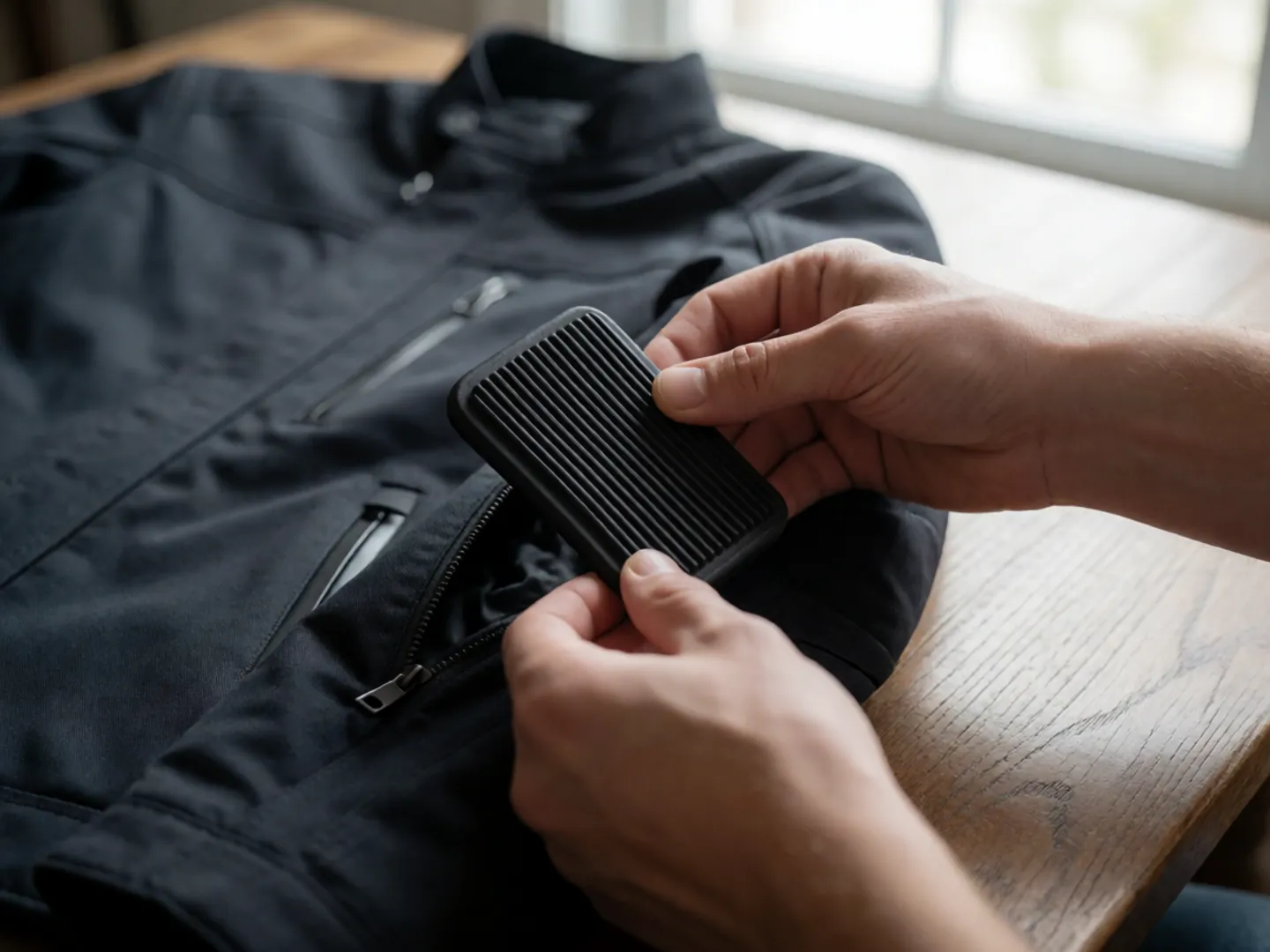
AA and AAA garments must have elbow, shoulder, knee and hip protectors; check each pocket is filled.
The standard checks fit and movement. Protectors should stay over the joints when you reach and bend.
The Highway Code advises strong boots and gloves too, and eye protection that meets the regulations.
HOW IT IS TESTED
EN 17092 tests the whole garment, not just the fabric. Material is mounted on spinning arms and dropped onto a concrete tile to simulate a 75 kg, 1.75 m rider sliding to a stop; removable waterproof and thermal liners are taken out first.
Seams, zips and protector pockets are strength-tested, two-piece suits must hold together under a pull of 100 newtons for 60 seconds, and sleeve restraints must keep sleeves in place. A tester also checks the garment allows the essential riding movements.
Questions
Only the helmet is. The Highway Code says riders and pillion passengers MUST wear a protective helmet, and advises strong boots, gloves and suitable clothing because they may help protect you in a collision.
SATRA says class B gives the same abrasion protection as class A but without impact protectors, so it offers no impact protection unless combined with other garments.
It is designed to hold impact protectors in place, as an undergarment or overgarment, and has no minimum abrasion protection. It is meant to be worn with an AAA, AA, A or B garment.
No. In the impact abrasion test all removable liners, such as waterproof or thermal liners, are taken out and the weakest material combinations are tested.
A crash study cited by the RAC Foundation found 26% of riders wearing a motorcycle jacket had upper-body open wounds, against 57% without one. The same report notes some kit failed in crashes.
ABOUT THIS NAME
techweargear.com is part of the DoodleSale portfolio. It isn't in an auction right now, but you can ask about leasing it.